OPTIMIZING DESIGN THINKING TRAININGS
FOR NOVICE FACILITATORS
FOR NOVICE FACILITATORS
Abstract
Innovation is crucial to any company living in a hyper-connected, globally world in order to sustain the future. Therefore design thinking serves as a concrete approach on "how" to innovate even when facing complex, wicked problems. As a result, design thinking has gained popularity and has been included in many academic business school programs. More practitioners require more facilitators teaching design thinking, but since this phenomenon has only occurred in recent years, there is a lack of empirical research.
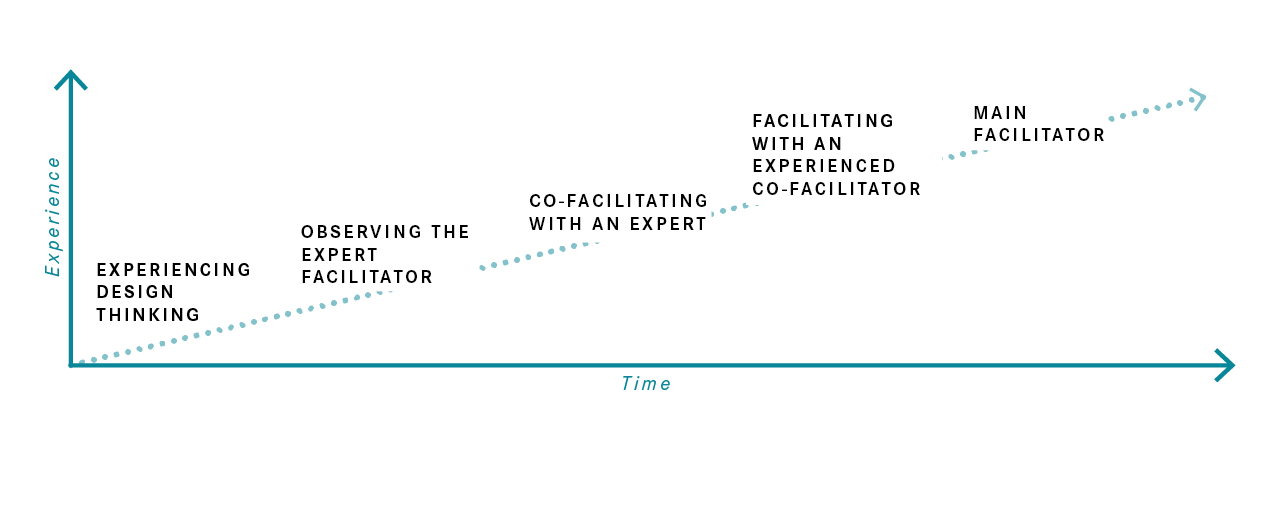
This thesis aims to close the chasm by optimizing design thinking training for novice facilitators. The objective is to find out what challenges do novice design thinking facilitators face and what criteria for tools and moderating procedures can be applied to support a well-structured workshop setting.
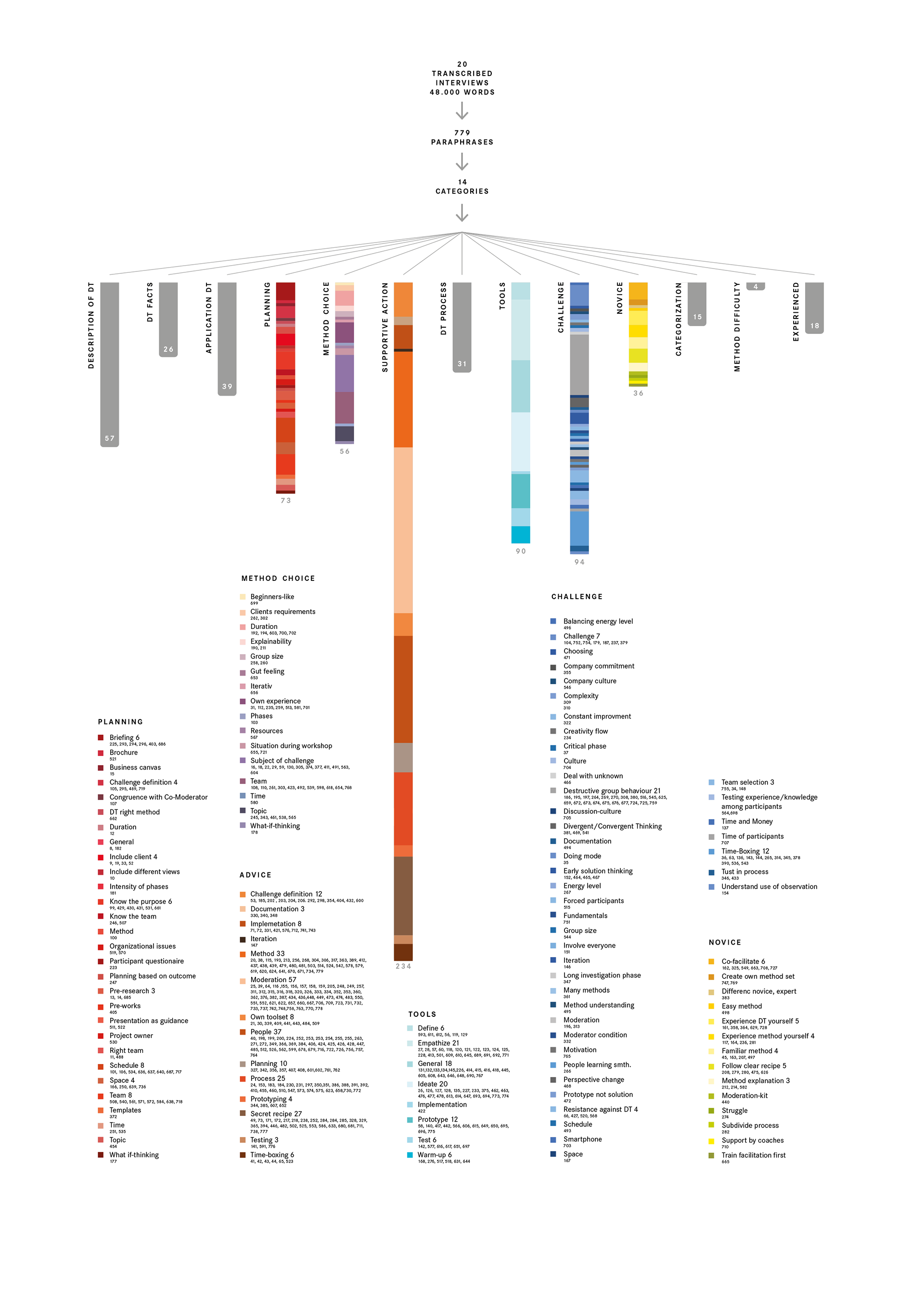
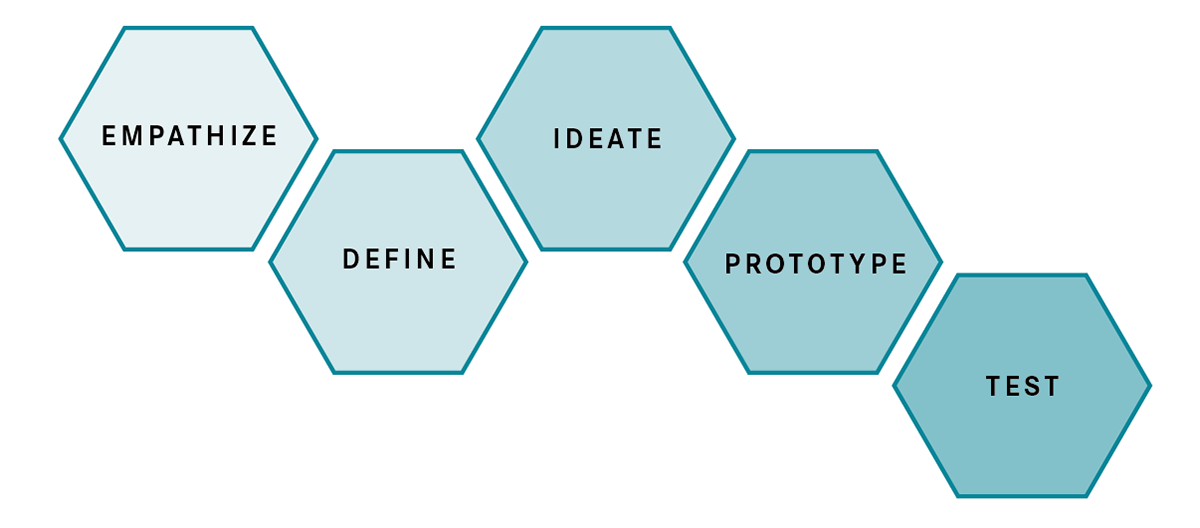
The researcher considers an exploratory, qualitative approach, conducted through content analysis of twenty semi-structured interviews with design thinking facilitation experts. Building upon the foundation of literature theory and practical insights from in-depth expert knowledge, the research developed a guideline that identifies possible challenges and proposes feasible solutions. Findings prove that general facilitation practices are transferable to design thinking, and basic facilitation capabilities are indispensable and crucial for success. This recognition embraces the need to shift the focus of design thinking facilitation from the process phases, methods, and tools to the moderator's capabilities and expertise. Further detailed findings of novice facilitation practices regarding the phases of the d.school. are illustrated. Hence, the thesis contributes to new knowledge being the first study investigating novice design thinking facilitation.
NOTICE: An own sub page where I publish my results will follow shortly.
Master's program "Management, Communication & IT"
Management Center Innsbruck
Thesis Advisor: Prof. Dr. Peter Mirski
Qualitative Research, 2019