CONcept
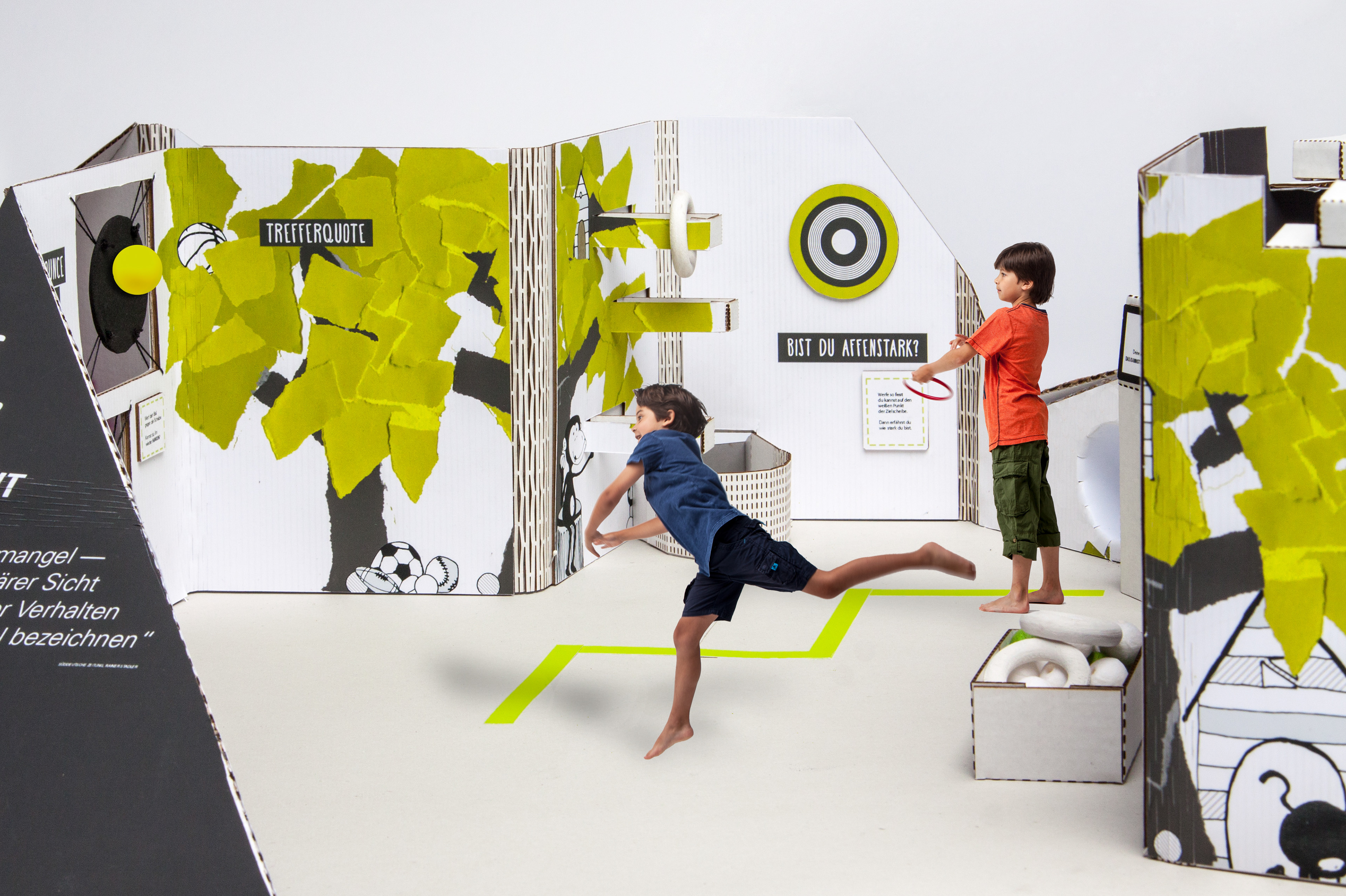
"On your marks, get set, go!" is a portable, exploratory exhibition for children and accompanying persons, which addresses the topic of lacking movement and inactivity.
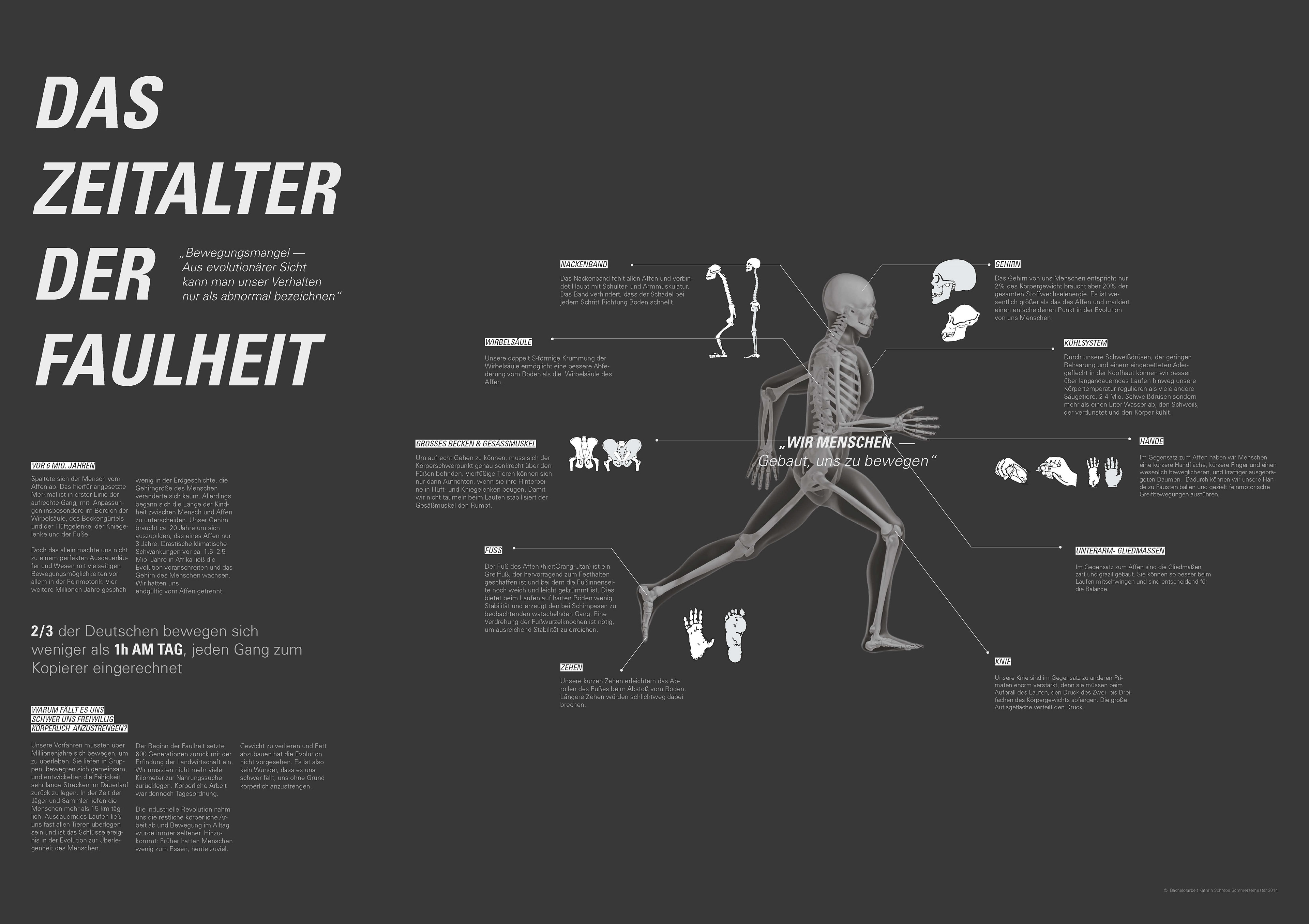
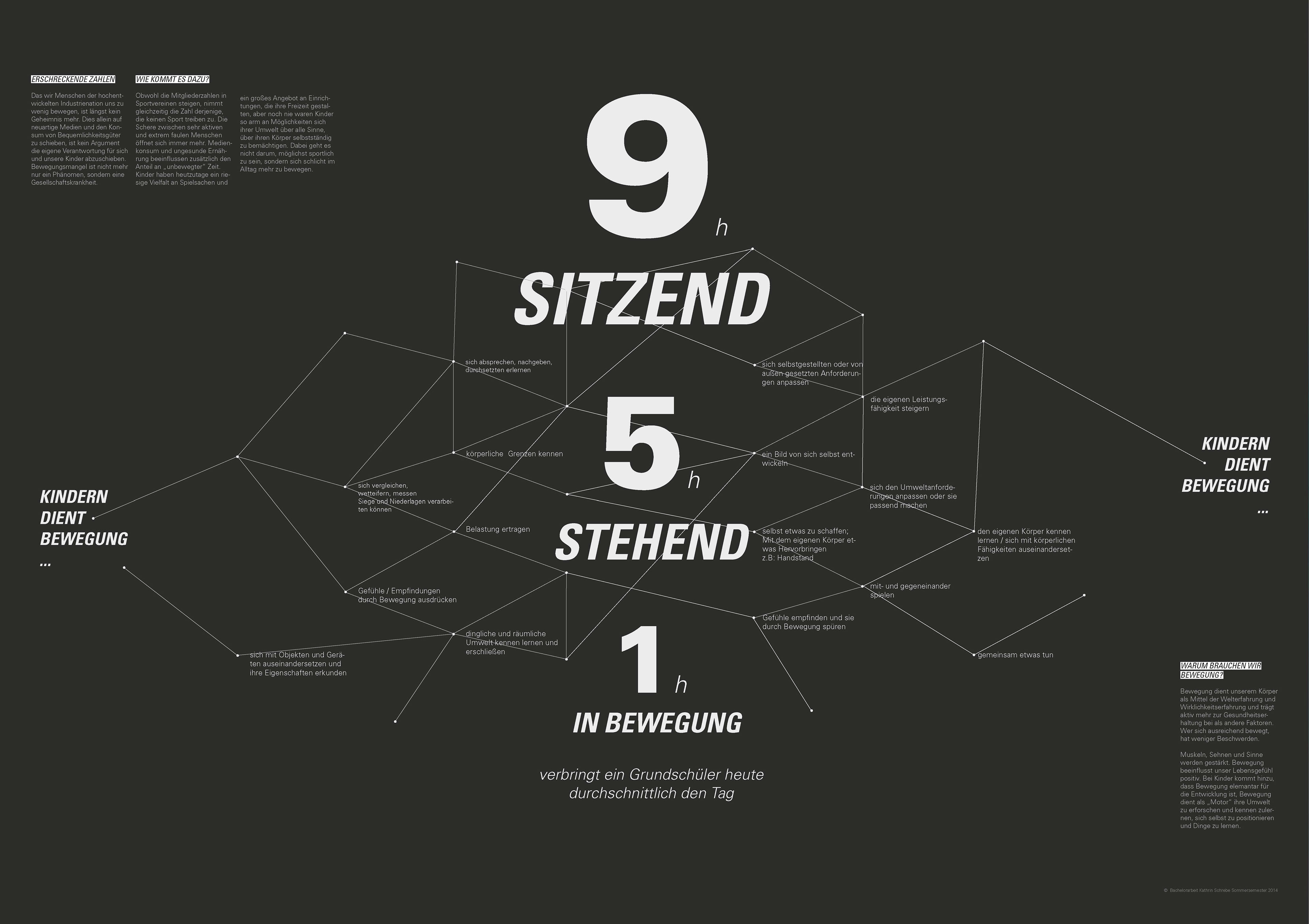
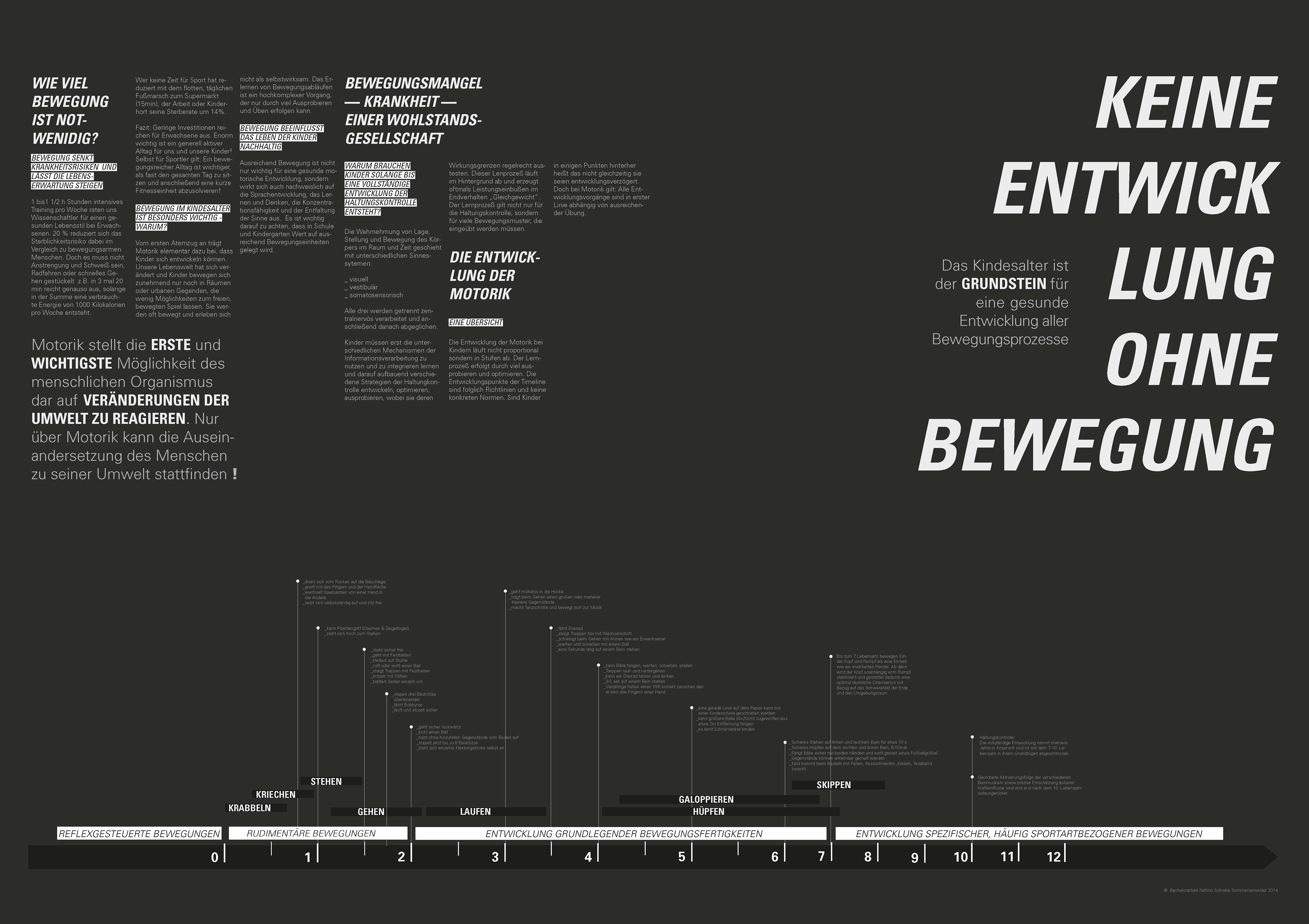
Lack of exercise is a phenomenon of our society today, the gap between very active and very lazy children is growing. Not only adults sit most of the day, but also children do not move enough. Primary school pupils spend on average 9 hours sitting, 5 hours standing and only one hour moving. Lack of exercise has far-reaching consequences for the development of children and affects almost all areas of life.
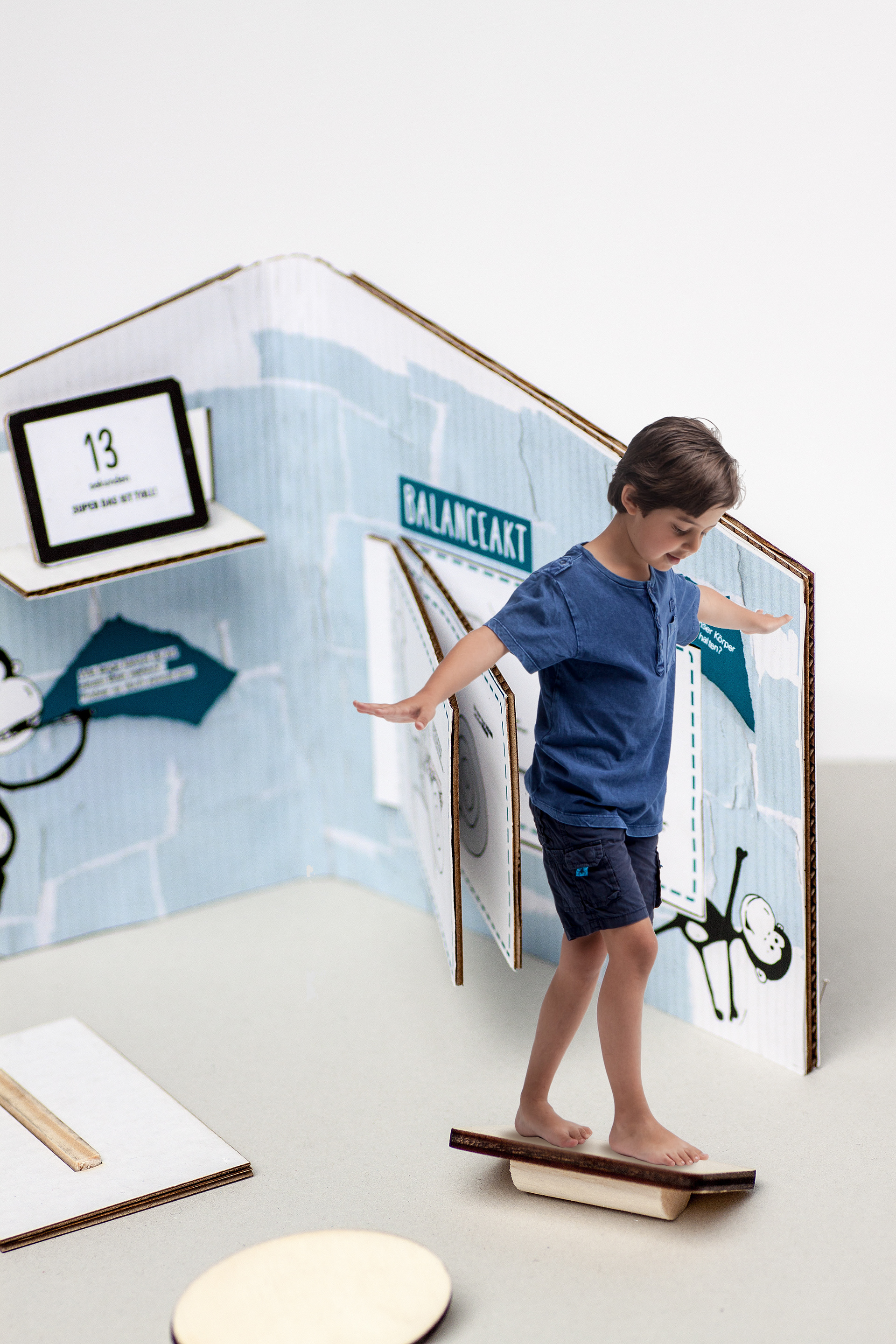
The main goal of the exhibition is to offer children an experience based on self-awareness in the areas of balance/posture control, target movements, mobility and coordination, and to convey fun in movement.
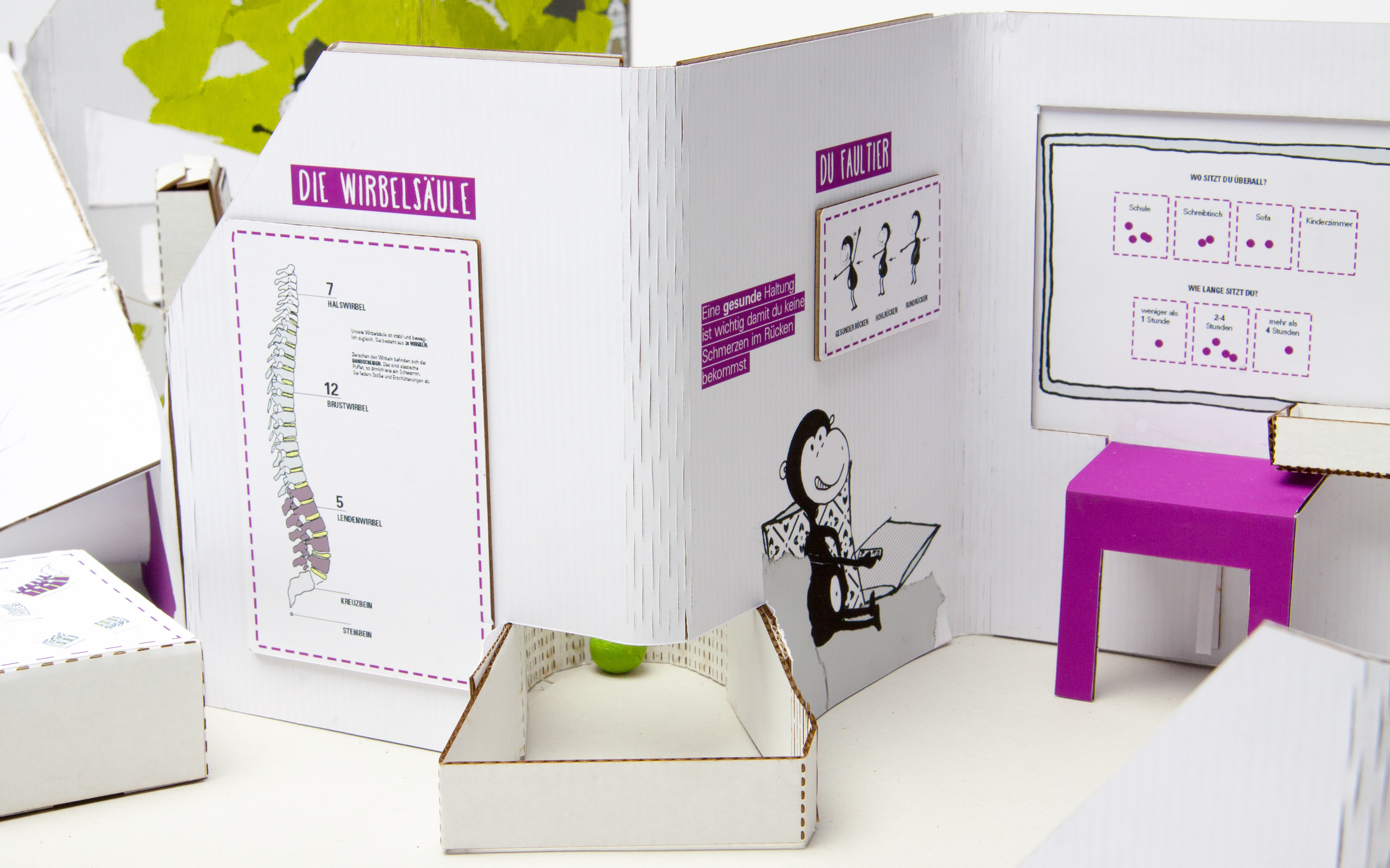
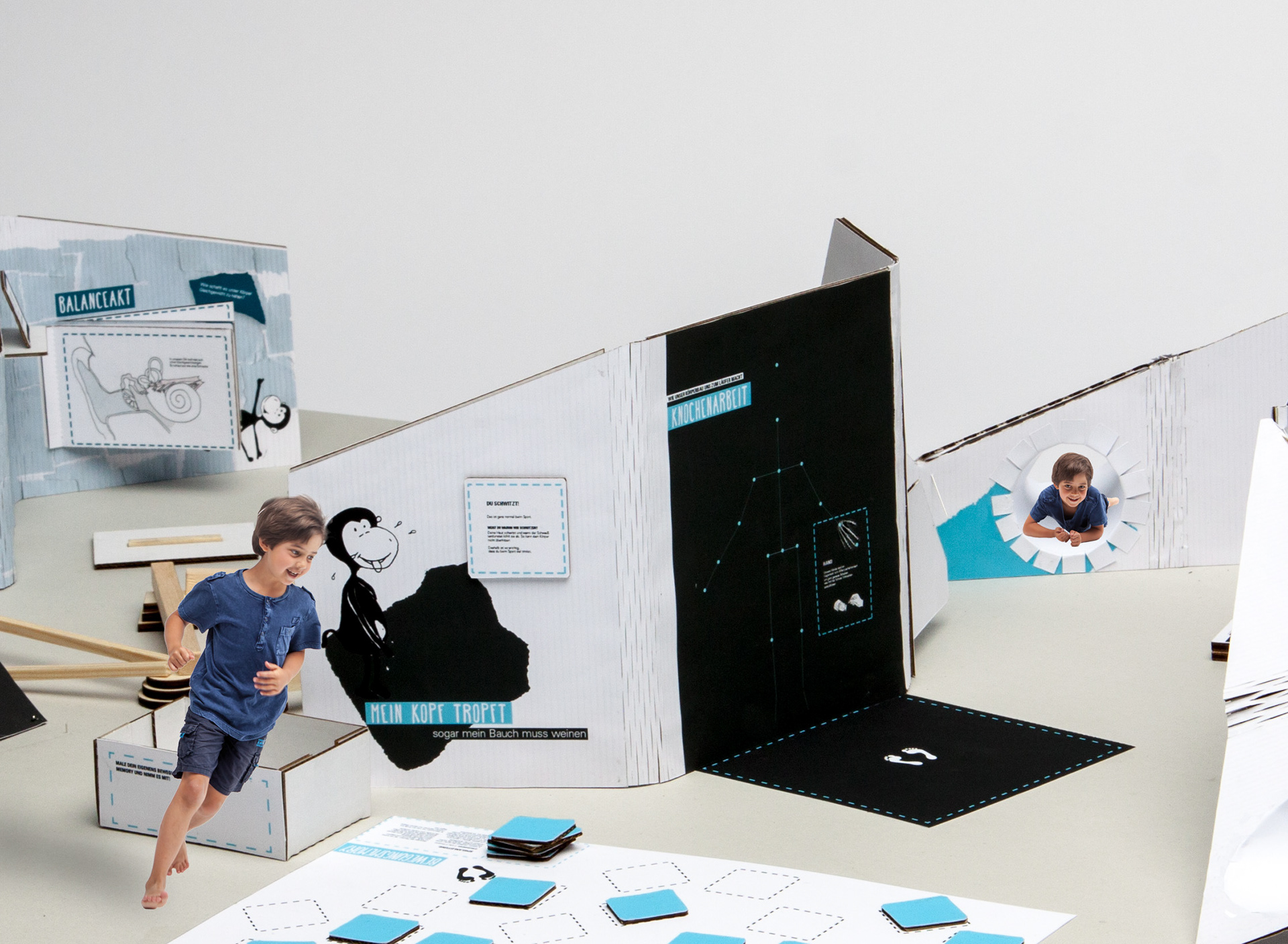
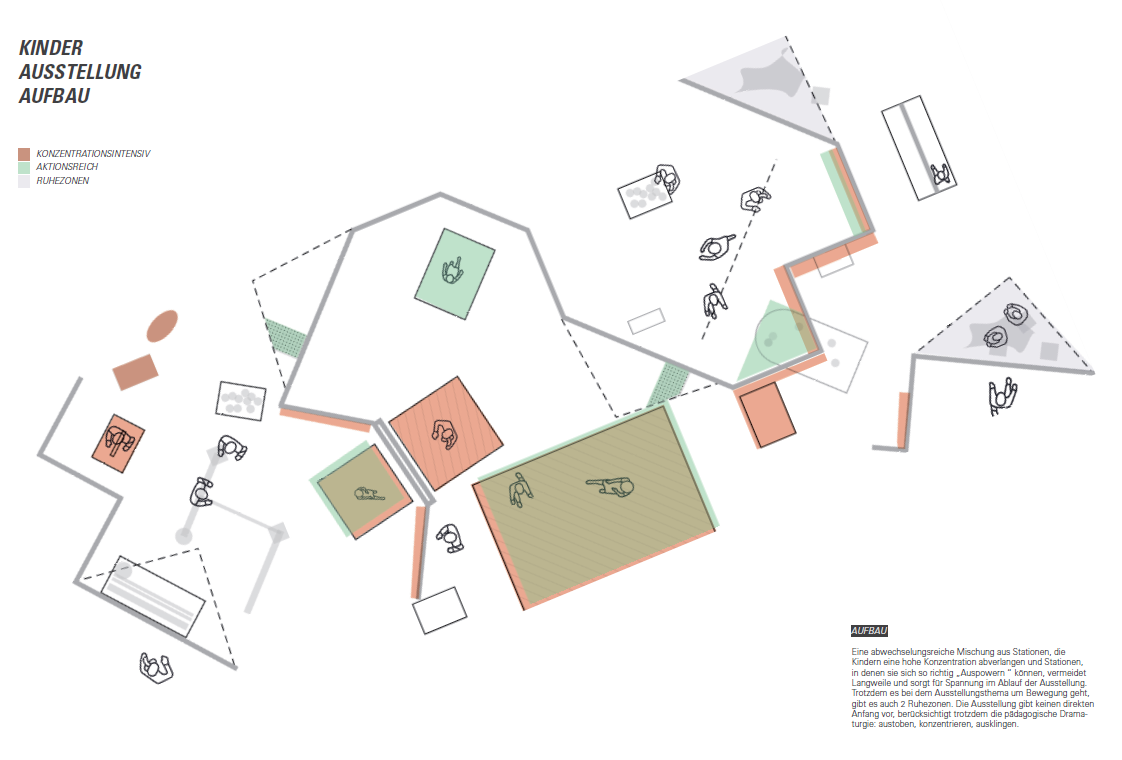
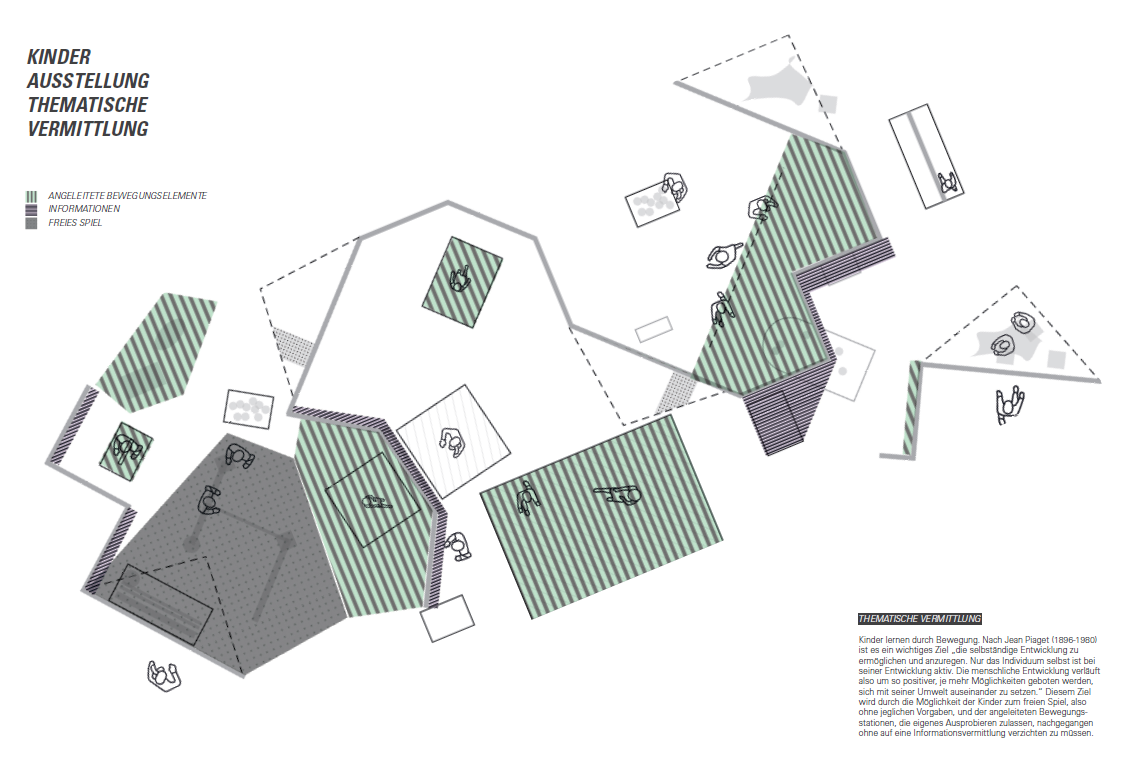
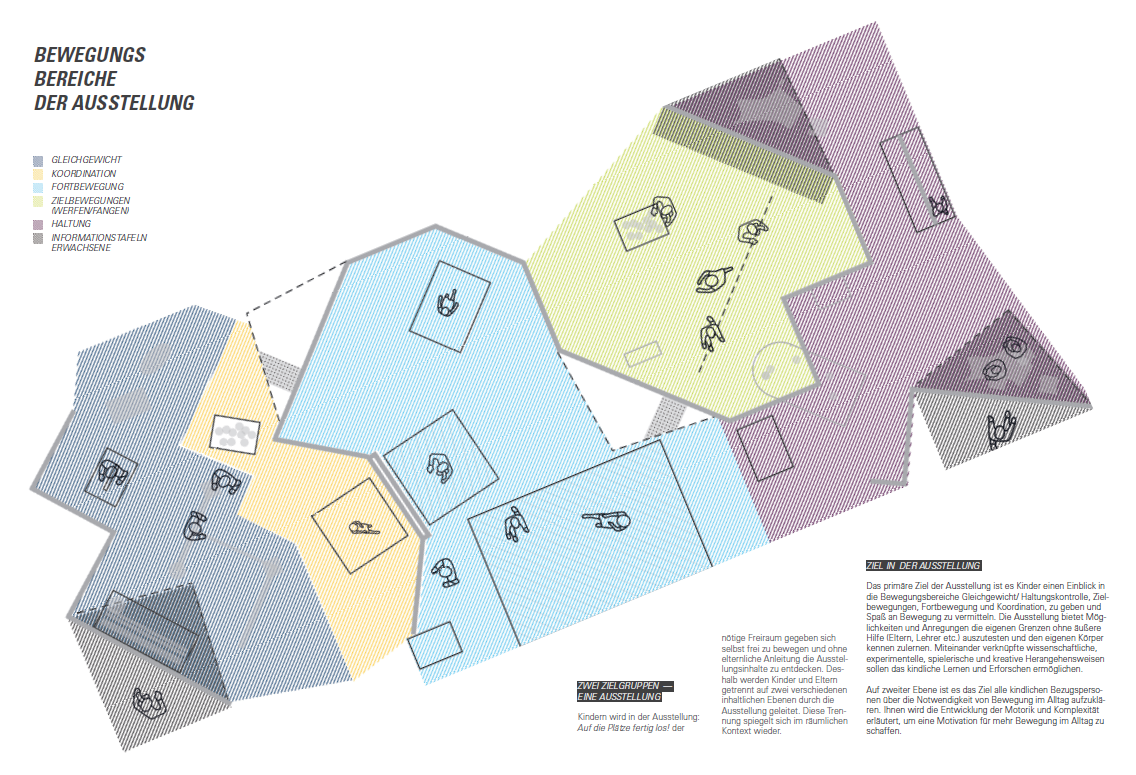
The exhibition is divided into five areas of movement: Balance, coordination, locomotion, target movement and posture. Children get possibilities to test their own limits and receive suggestions of movements to get to know their own body. Overall linked scientific, experimental, playful and creative approaches enable childlike learning and exploration.
Children are given the necessary freedom to move freely and discover the exhibition contents without parental guidance. Therefore, children and parents are guided separately through the exhibition on two different levels of content. This separation also plays a decisive role in the spatial context.
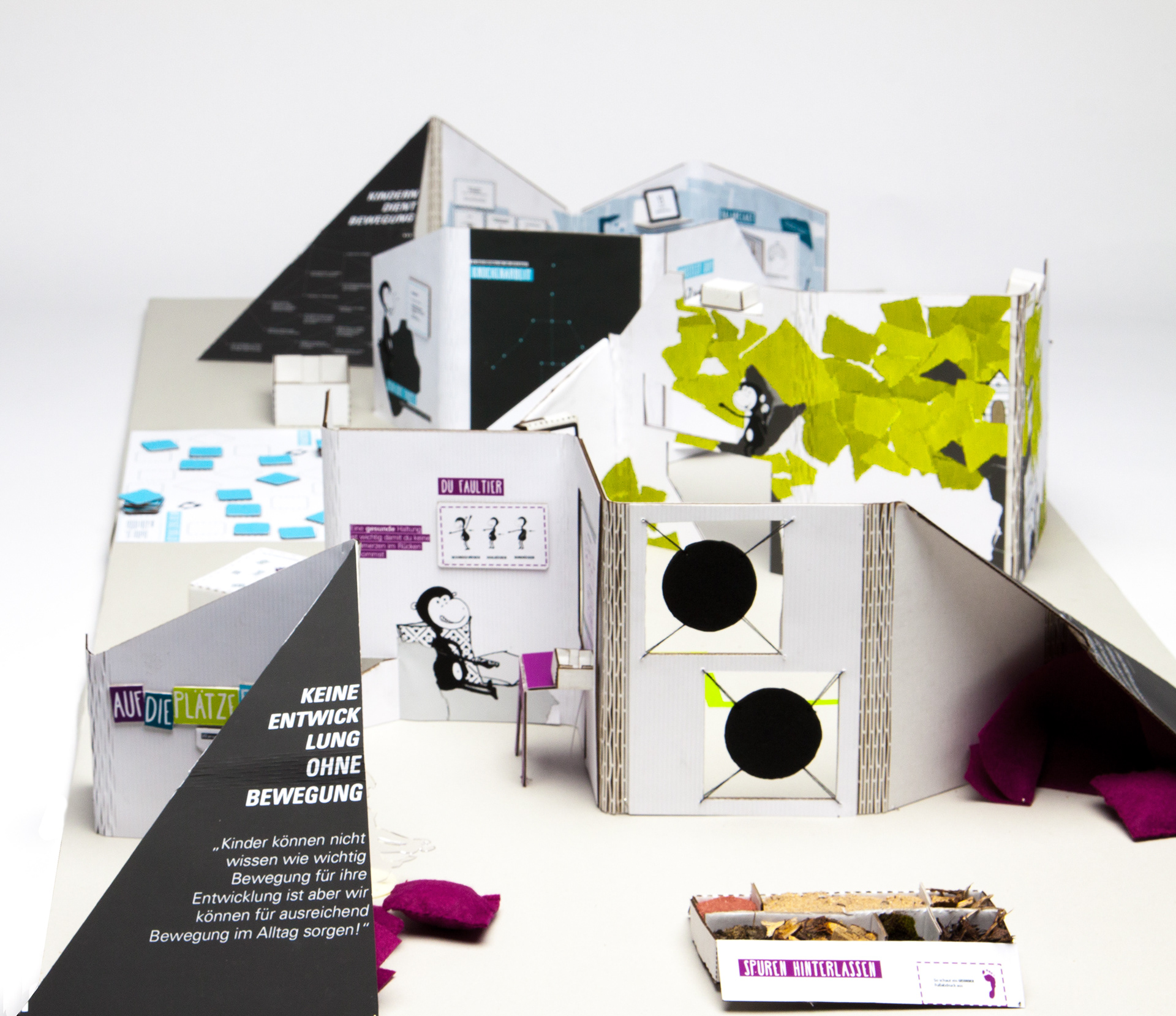
One of the most important aspects of the concept lies in the mobility and variability that an exhibition has to provide in order to take place at various destinations such as school playgrounds. An exhibition that focuses on the experience of movement must move itself. Only then can a greater mass be reached. My goal was to find a way that guarantees the simplest possible assembly and transport from A to B, while at the same time being variable enough to adapt to the surroundings on site. This means reducing the individual stations to their essential content and dispensing with playground like, complex movement landscapes. This means to integrate even technically extended stations in such a way that it is possible to exclude or add them depending on the circumstances of the location.
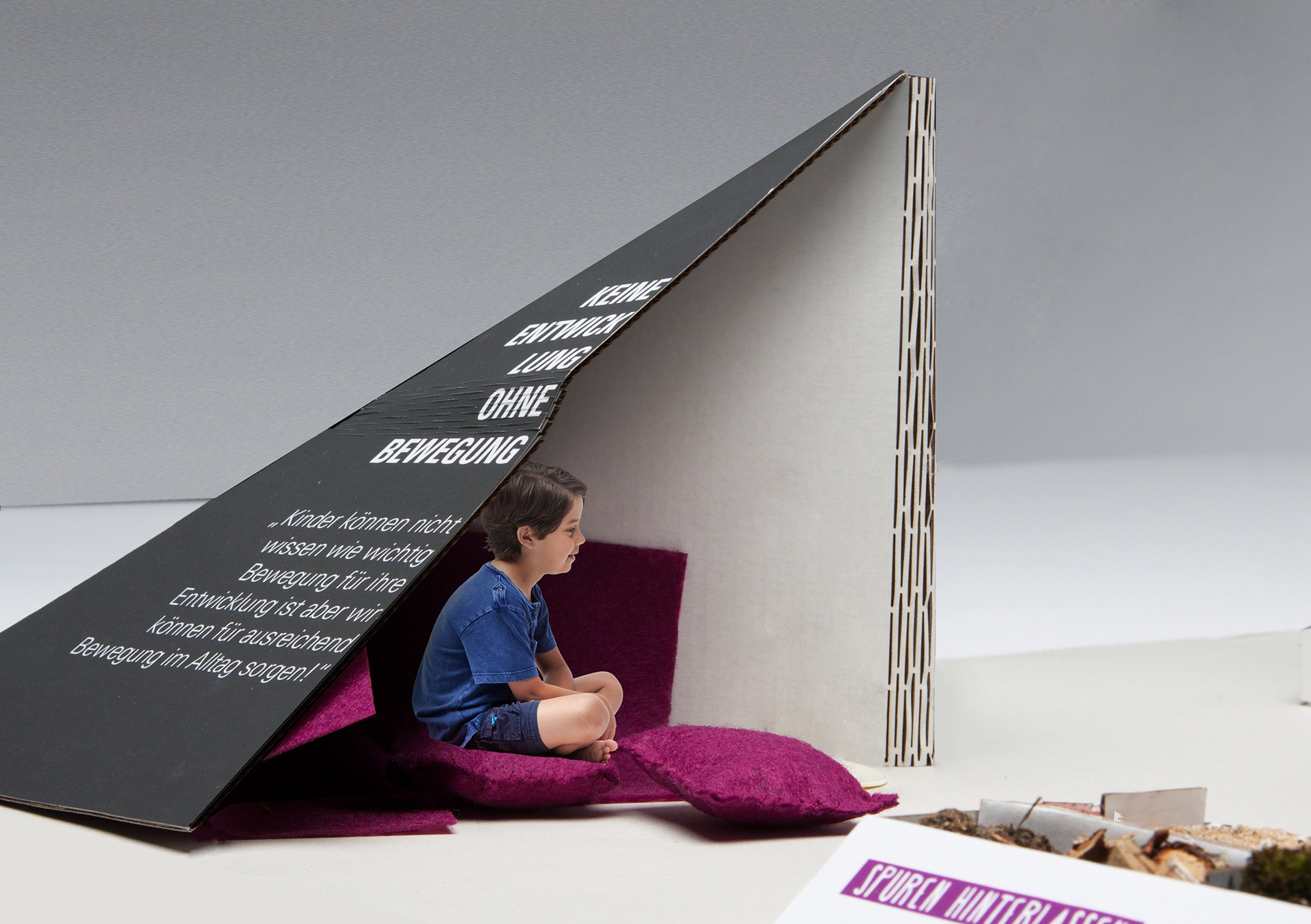
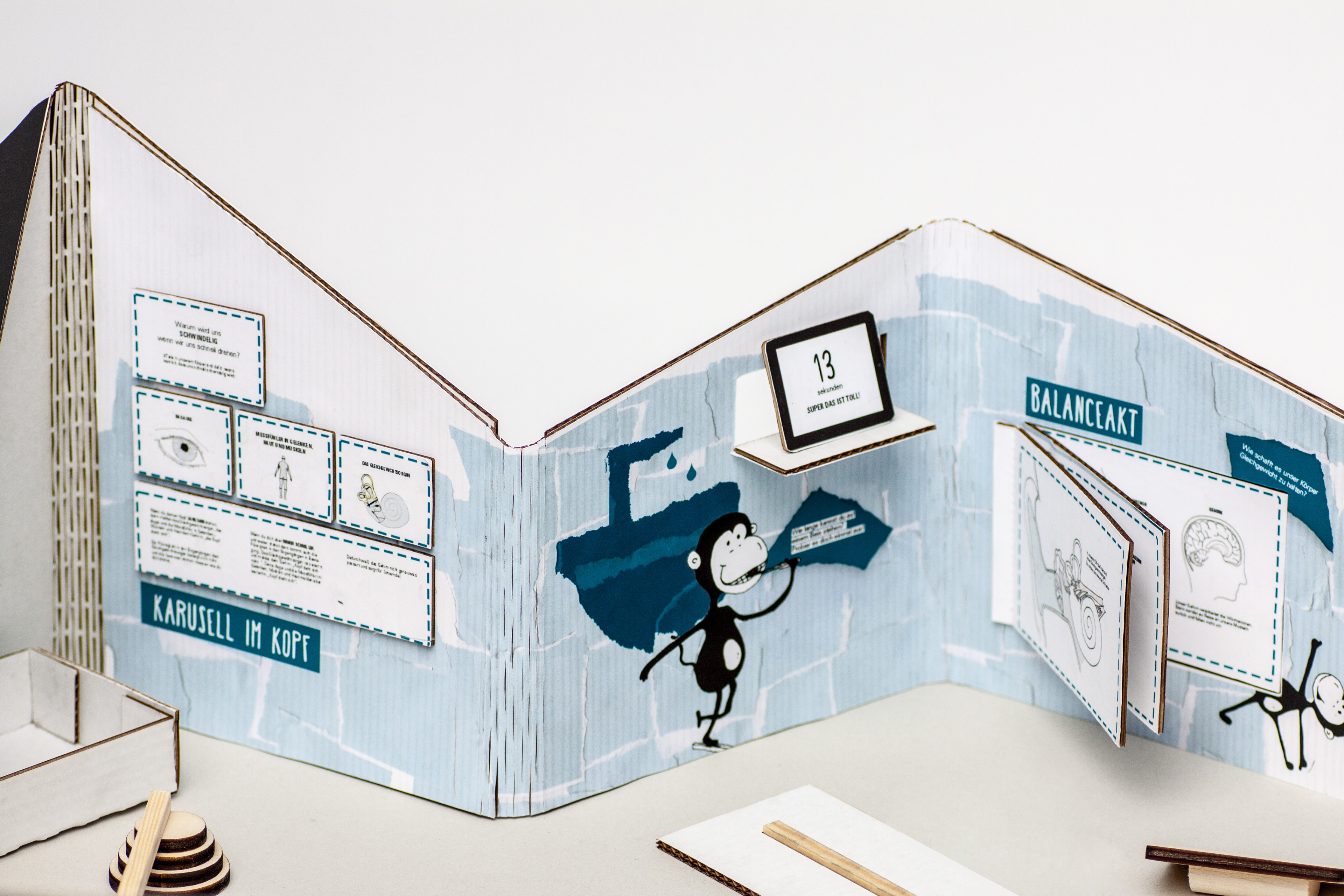
The result is a system based on the principle of an accordion. A room division system that can be folded up and is therefore quick and easy to assemble and disassemble as well as easy to transport. Movement elements for creeping and crawling are directly integrated. Three-dimensionality is created by pop-oute elements that are directly integrated. Openings penetrate the rigid system and give the possibility to dive from one subject area into the next.